

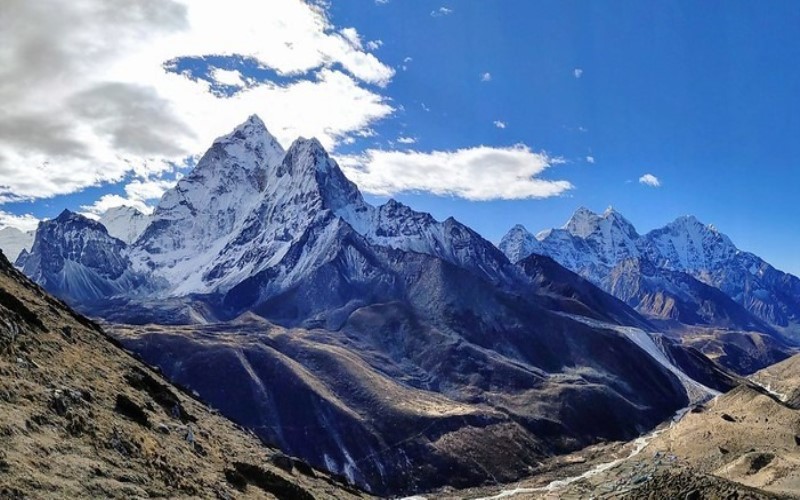
Everest Base Camp is considered a pilgrimage for adventure seekers and when you get to experience the trek yourself you start to weave your own personal journey along the pathways through the Everest region. The journey begins with an exhilarating flight landing into one of the ten most dangerous airports in the world, to a very busy town called Lukla. When you step off the plane and take a deep breath of that mountain fresh air for the first time, it sets off to a new Railway Station in Nilgiri Hillspeak adventure of Alto Mountain to know where your journey is heading into the depths of Himalayan valleys!
The trail unwinds and trekkers are enclosed by the astounding beauty of the Khumbu region. The route winds through deep green valleys, bright rhododendron flowers and pretty villages that are rich in the warm hospitality of Sherpa people. Every village, from Phakding to Namche Bazaar provides a magical peek into local life and traditions filled with lines of prayer flags fluttering in the breeze and recitative incantations echoing from monasteries up hillsides. Buddhist influence is very strong and trekkers often go through small rituals, light up some butter lamps or have a cup of tea with people there.
The trek itself is a challenge of strength and stamina as you ascend in altitude. Everest base Camp Trek cost The thin air makes it difficult, and the payoff is stunning: 360-degree views of giant peaks like Everest, Lhotse and Nuptse. The rugged landscape features rock-strewn pathways and steep inclines, so the race requires strength and willpower. Every step is an obstacle, but it is this comradeship within the group that turns strife into shared victory, encouraging friendships which last beyond the mountains.
The acclimatization days gently interspersed within the itinerary are where your body time to get used to the altitude as well as providing you with an opportunity for exploration. No rest days would be complete without short treks up to viewpoints like the Everest View Hotel, where trekkers can marvel at the sight of the world’s highest peak and have their breath taken away from them. The attraction is not simply the destination but rather also the journey of it: every town, person seen and told a story adds to what can become an enchanted memory.
For someone like me, that climb to Everest Base Camp at 5,364 meters (17,598 feet) above sea level is a bittersweet moment. It’s exhilarating and humbling: the grandeur of the Khumbu Icefall, the immensity of being at the base of the highest peak on earth. Filled with climbers preparing for their ascent, this busy area exudes a sense of resolve and optimism.
For trekker as they recollect their journey, the trek to the Everest Base Camp is not just another adventure instead a life change over experience that create an emotional bond with mountains and your own self. We are reminded of the beauty of nature, the strength of resilience, and that through hardship creates unity among all. Every trekker steps out with memories of the beautiful views around and soul so rejuvenated, looking forward to more such experiences.
Roof of the WorldandExpectLinked to Roof of the World
Most often the name “Roof of the World” is used to describe the grandiose Himalayas, dominated Mount Everest. That highest peak on Earth — be sure to remember it is 8,848 meters (29,029 feet) tall — has pulled adventurers and trekkers from every part of the world. Taking on the Everest Base Camp trek provides a glimpse of this awe-inspiring landscape whilst also allowing you to become immersed in the Sherpa culture so prominent in this area. The itinerary with majestic elevated views of monolithic spires, narrow valleys and massif limestone glaciers is not only just another trek, but also acts as an enlightening self-exploring excursion.
Trekkers come across friendly Sherpa villages and ancient monasteries as they walk along — when you spend that much time in these hills, after all, it is no wonder the mountains have become more myth than landform. Every foot strike on the trail is a tribute to tenacity and resilience, as hikers struggle high altitudes and demanding landscapes. The Himalayas, with their spiritual importance rooted in local history and tradition, coming into play offers an additional layer of depth to the journey. Getting to Base Camp is not just an objective in and of itself, it’s a journey where you learn to appreciate the beauty of nature as well as companionship, with local people met on the trail.
Planning the Trek
Simply taking the time to learn how to plan a trek to Everest Base Camp is an exciting adventure that requires meticulous planning and forethought. The first and the foremost thing that any trekker needs to take in account is their level of fitness because it requires strong physical ability besides determination. Developing a workout routine that incorporates cardiovascular work, weight training and long hikes will go a long way to make sure one has the physical fitness to get up everything with their pack. Furthermore, the season in which one chooses to trek is important too; the most popular times are pre-monsoon (March-May) and post monsoon (late September- November), as the weather during these periods is generally more stable.
A lot of logistics go into the planning process. You require permits as a trekker to enter the place of which, the Sagarmatha National Park entry permit and TIMS (Trekkers’ Information Management System) card are quite significant. Another significant step is to arrange transportation to Lukla, either through a travel agency or independently. The trek passes through a range of ecosystems, eventually leaving the forested paths for the moorlands of Kilimanjaro then finally reaching its summit at 19,341 feet.Many climbers elect to go with guided tours providing logistical support and experienced guides also carrying your stuff.
Finally, delivering the correct machine is essential. These are essentials and include tough trekking boots, clothing for hot or cold weather, a good quality sleeping bag. Adventurers who plan the journey to the Roof of the World (that is, Mount Everest) will have a good chance for an unforgettable trek if they do not forget planning precisely every element along with it
Getting to Nepal
The adventure to Everest Base Camp begins as soon as you arrive in Nepal, a country full of culture and beautiful landscapes. Kathmandu, the bustling capital city is where most global visitors start their journey. Stepping off, a burst of color from local market stalls and smells like no other, wafts gently through the air from street food that beckons visitors as they exit Tribhuvan International Airport.
Spending a couple of days in Kathmandu is recommended so you can recover from jetlag, acclimatize to the elevation and also explore some interesting historical and cultural sites. Highlights: visit the UNESCO World Heritage site of Swayambhunath Stupa (also known as the Monkey Temple) and Pashupatinath Temple, home to one of the most important areas in Nepal where you can feel that spiritual quality.
It is the perfect place for trekkers to made it logistically cleared because trekkers are able to sort out all of their logistics in Kathmandu like permits, trekking agencies or guides. There is no shortage of outlets to rent and almost more importantly, purchase all needed supplies in the city, which makes it a convenient home base for people looking to get out on some fresh powder. Following a little sightseeing and sound herd in Kathmandu, very soon we board an early morning flight to Lukla the trailhead of trek!! This change from the chaos of city life to the tranquillity of mountains is symbolic for the wonderfully exciting journey into heart of Himalayas.
The Flight to Lukla
Many consider the flight to Lukla one of the highlights of the Everest Base Camp trek. Flying from Kathmandu, the flight is just 30 minutes in duration and we will fly over verdant valleys, terraced fields and spectacular mountain scenery -almost disbelieving our eyes. This is a small twin engine plane that flies through the rugged terrain of the Himalayas which technically opens to sequence with stunning aerial views thus priming you for your adrenalin induced trip.
The thrilling ride in a propeller plane has you nervously building up your excitement for seeing the airport by air. Acharya of Tenzing-Hillary Airport, located at the height of 2,860 meters (9,383 feet), is famous for its tricky runway bordered on each end by mountains and just 527 meters long. Overhead ApproachThe overhead approach at Tarbes Lourdes can be a tricky procedure for certain types requiring skills to make a clean landing adding that special touch of every inbound.
No sooner you would land and you will be charged by the electric energy of Lukla stepping into this happening mountain town full of travelers, trekkers and local vendors. The sensation of excitement and fraternal is all in the air where explorers gear up for clicking by fantasia. Lukla acts as a kind of front door to the Khumbu area, offering basic facilities including gear stores, tea houses and last-minute supplies. The first important part is now over and trekker can now aim for the pebble path which take you to see all the trail to Mt. Everest Base Camp.
Trekking Itinerary Overview
Online itinerary of trek to EBC offers a glimpse some unforgettable experiences in the journey. The itinerary usually covers 12 to 14 days, including trekking days and acclimatization breaks so trekkers can get used to the thin air. The trip starts in Lukla, and the track immediately charms you with beautiful panoramas as well as hospitality of local Sherpa communities.
The next few days are filled with trekking through beautiful villages such as Phakding and Namche Bazaar which provide different cultural insights and awesome views of surrounding peaks. As the core of the Everest Region, Namche acts as an essential acclimatizing rest point, where visitors can browse for some souvenirs or get a feel of Sherpa lifestyle.
The trek carries on with adventurers following the route up to Tengboche where they can see Everest and visit one of the most important monasteries in the entire region. This is usually accompanied by several acclimatization days (e.g. a hike to Kala Patthar for sunrise over Everest) which gives trekkers the opportunity to enjoy the grandeur of their surroundings and also prepares them for the arduous climb up to Base Camp.
The high point of the trek is arriving at Everest Base Camp – with towering panoramas surrounding and the jaw-dropping spectacle of the Khumbu Icefall. The schedule is full of excitement, natural beauty, and development, making this journey to the Roof of the World unforgettable.
A Day-by-Day Trekking Account
The journey to Everest Base Camp day-by-day is an odyssey of self discovery, friendships that form a bond for life and of course the staggering magnificence of Nepal. Each day from Lukla is a new landscape and adventure. The first day often sees trekkers descending into the rich green valleys of Phakding where they can relax by the Dudh Kosi River that flows serenely in these parts. Day two leads to Namche Bazaar with steep ascent to acclimatization and the views of staggering views all around and culture.
The trek goes on, with breaks for acclimatization every day, as the body acclimates to higher elevations. Namche to TengbocheThe trail from Namche to Tengboche takes trekkers directly to the renowned Tengboche Monastery, a spiritual center with views of Everest. A day that is usually ringing to the sound of monks chanting and multi-coloured prayer flags fluttering in the wind.
Afterward, trekkers proceed to Dingboche where the vegetation begins to disappear in favor of a dry and rugged terrain leading to excellent views of Makalu and Lhotse. The trek then finishes with a challenging climb up to Gorak Shep, which is the final stop prior to Base Camp. The atmosphere here is electrifying as trekkers finally arrive at Everest Base Camp, standing in the shadow of the highest mountain in the world with 360-degree views of the surrounding Himalayas. Every day on the trail presents a challenge of physical endurance, as well as introspection with each other and within yourself.
Acclimatization Strategies
The most important part of the Everest Base Camp trek is acclimatization so trekkers can properly adjust to high altitudes and decrease the likelihood of altitude sickness. This trek has been specially designed by keeping acclimatization days at critical intervals so that the body adapts slowly to lower and lower oxygen levels. The best method: “Climb high, sleep low,” which essentially means going up in altitude during the day but coming back down to a lower point at night to rest. It optimizes acclimatization without overburdening the body.
Hydration and a gradual ascent are the key to acclimatisation. Drinking water is really important when trekking to help prevent altitude sickness, all symptoms of altitude sickness can be made worse if you are dehydrated. Eating is just as vital, a diet with carbohydrates, proteins and fats (the good ones) that help keep your energy levels high and support the adaptation process of the body.
The days of rest are also carefully built into the itinerary to enable trekkers to recover and enjoy their beautiful surroundings. Doing light activities in these days — like 30-minute hikes — is a good way to get the blood flowing without overexertion, and still acclimating. The best protocol is likely a mix of all these tactics: acclimatising slowly, reducing dehydration, eating and sleeping properly.
Meeting the Locals
Perhaps the most rewarding part of the EBC Trek is having the opportunity to meet with local Sherpa people, who share a close relationship with mountainous terrain and a beautiful cultural heritage. All the time you are moving on your trek through the village of Khumbu and meet friendly villagers is quite normal to welcome them with a smile and tradition. While you are there too, the local will give an idea of how they live in this hardness enviroment, with their traditions still as intense.
Sherpas are renowned for their exceptional fortitude and endurance – they are often employed as guides and porters for trekkers. Sherpas are ideal company due to their familiarity with the area and expertise in walking at altitudes. While talking with Sherpas, trekkers are introduced to the culture of the people, including their traditional customs, festivals, and religious beliefs. Meanwhile, taking part in community activities with the residents such as eating meals with them or attending local events fosters a sense of community and respect. This not only enriches the trek but also enhances appreciation and understanding. Through such activities, trekkers become family members with the Sherpas and are well-informed of the diverse history and the mountains they are heading. Khumbu cultural Highlights. The Khumbu region is rich in culture and history. The region is influenced by Buddhism deeply impacted by Buddhists’ architectural, artistic, and religious acts. Prayer flags, monasteries, and stupas dot the landscape – each of these items represents spiritual devotion and peace. Tengboche, one of the most renowned monasteries in the region, overlooks Mt. Everest and is a fundamental spiritual center. Various Sherpa festivals bring the area to life, characterized by multi-colored dances and music. Mani Rimdu, the autumn festival, is an example of a vital event that stimulates the community.
We experience the Sherpa peoples everyday friendliness and are aware of their kind-hearted hospitality. To eat dal bhat (known in Nepal as dahl, rice and curries) at a teahouse is to open your mind up to stories of the Himalayan way of life, learn of their traditions and history and how all their culture connects them with the mountains. This cultural immersion enriches the trekking experience and gives trekkers an opportunity to not only marvel at the pristine natural beauty of the region but also admire the vibrant tapestry of human life that thrives amidst these giant Himalayan peaks.
Wildlife Of Everest
The ecosystem in the region is varied and unique, the flora and fauna are exciting and beautiful evolved impressive to exist under extreme high altitude conditions. As climbers ascend through different altitudinal belts, they face a variety of plant life. The lower elevations are covered with dense rhododendron forests, awash with crimson blooms against the soaring peaks. With altitude the vegetation changes to alpine meadows with hardy plants such as edelweiss and hardy grasses capable of growing in the harsh environment.
The wildlife here is just as fascinating and while there are no big animals about the high altitudes make things like leopards pretty hard to spot. In the Khumbu, trekking an agile Himalayan tahr and a graceful snow leopard stalks across the rugged landscape. The park is also home to other wild animals such as Anderson´s (or Plateau) Tortoise, the Red Panda, Himalayan monal which capacity like liqueur drinking hen and pheasants a number of prestigious species. The animals I saw here are an indicator of how this ecosystem is perfect and just the right amount of space needed — a balance where every thing has its place in the high altitudes.
It is the unique ecosystem which we are in need of conservation efforts. Residents of Solukhumbu earn their livelihood cultivating and marketing various crops including potatoes while illicit timber trade endangers the Sapta Kosi Valley forest as the Khumjung People exert extra effort to counteract deforestation using other unseen incomeDevelopers are careful not to harm the biodiversity when infusing money into infrastructure in Lukla, Namche Bazaar and Khumjung all located within Sagarmatha National Park, a UNESCO World Heritage Site. Trekkers and tourism guides are encouraged to take a good care while practicing their sports in the mountains, trying not to interfere in any of the natural habitats they walk through. The flora and fauna of the Everest region really adds that extra mystical touch to the trekking, reminding hikers of how delicate ecosystems can be at such high altitude.
Challenges Faced on the Trail
Trekking to Everest Base Camp is the journey for fit and seasoned walkers. Among the considerable obstacles themselves is the high altitude that may cause altitude sickness should climbers not acclimatise well. Suddenly, (patients) may start to develop symptoms such as headaches or a little bit of nausea such that it is quite important for the trekkers to be in tune with their bodies and learn when they should go up or down.
The harsh landscape itself can be an obstacle, too. The stamina to track on some rough paths, steep ascents, uneven road and we have initiatives but require assessing every not to overlook the way. Weather:There Might Be Unexpected Rain Or Snow That Can Make The Visibility Very Low,besides It Affects The Safety Of Some Trails. This unpredictability means favouring flexibility over planned process, and must be agile enough to pivot when the need arises.
Having a strong mental resilience is also important to fighting through the challenges. The treks may be have been long and tiring lasting hours of continous walk. Physically and mentally, you will start to hit a wall of fatigue which can challenge you. Camaraderie between trekkers is one of the biggests sources of motivation, pushing folks through their most trying moments. In the end, battling adversity and prevailing not only reaffirms your journey but adds to your vista of triumphs; invoking a “I did it” moment and self-confidence.
Safety Measures and First Aid
The trek to Everest Base Camp — where the treacherous risk of altitude sickness, mountain valleys and passes, and unpredictable weather makes it impossible to engage in nonchalant endeavours with carelessness — spotlights safety. It is highly recommended that trekkers are able to identify the symptoms of altitude sickness and follow acclimatization techniques allowing for slow ascents and few days of rest in between. A personal first-aid kit is a must for things like pain killers, antiseptics and altitude sickness medication.
A guide is needed, as he or she can judge health status and give first aid while knowing when to call for help. These guides are well trained in dealing with emergencies, such as recognizing the onset of altitude sickness and how to deal with injuries. Both the 2nd point and the regular group check-ins help create a safe atmosphere in which trekkers can make sure that their friends are doing well and if not raise concerns.
You will also need a satellite phone or walkie talkie, if you plan on being in locations without cell service. Also, in an emergency, having the knowledge of where the nearest medical care is available and how to get evacuations done quickly can save lives. By taking precautions and considering them as potential challenges for the future trekkers can not only enjoy a fascinating trekking experience but also save themselves from certain risks during their journey.
Reaching Everest Base Camp
The time of arriving at Everest Base Camp is a transforming experience as it symbolises days of arduous trekking and indomitable resolve. Base Camp is located at 5,364 meters (17,598 feet), and serves as the launching off point where climbers then aim for the summit of Mount Everest. Trekkers get excited as they come near the base with stunning view of the Khumbu Icefall and surrounding peaks.
When you get there you know, it is nailed on in the air that they have achieved something together and all as one. For the trekkers, they end up reminiscing on the journey itself; The aches in their body, the smiles shared between friends and strangers, and beautiful landscapes revealed before them. There is a bond when you stand at Base Camp with your fellow trekkers and climbers, that awe coming only from standing at the foot of the world’s tallest peak together.
The moment is celebrated by many of the trekkers and they take their time to click pictures with friends sharing stories. This is not simply arrival on a flight, but culmination of dreams, striving and struggle. Think of this as a reminder that exploration is beautiful, and the spirit of adventure lives within us to continue to test our limits.
Part 5—Reflections_And Personal Growth
Everest Base Camp trek will make you soul-search and grow. Stepping it up at high elevations and tough, inborn terrains allows trekkers to unlock potential from within which they least expected. Every single step down that trail was its way of showing me just how tough and gruelling life can be if you have to provide for yourself, constantly reminding me the necessity of strength in circumstances when things go south.
A long walk also promotes a lot of time for contemplation. In the backdrop of majestic Himalayas, a trekker reflects on life in terms of aspirations; goals and priorities. With the beautiful landscapes and time alone to think, you experience a deep process of learning by thinking which goes beyond the simple mechanics of walking. People reported feeling more thankful, and that their experience of nature was enhanced, commentators wrote.
Besides, it creates emotional connections among the trekkers or with the local sherpas which helps in making every individual feel they belong to a group and everyone is in this together. So many of these relationships can turn into life-long friendships, showing us that adventure is so much more than just the places we go but also the people we meet along the way. In the end, it is a journey that changes people, molding them and imprinting in their minds memories they will long to rediscover on yet another trip.
Conclusion: The Adventure Spirit
Climbing to Everest Base Camp is the archetypal adventure — a stirring cocktail of challenge, discovery and comradeship. Every facet of the trip: From the awe-inspiring backdrop to fellow trekkers sharing in a sense of wonder., encapsulates adventure and chasing dreams. As explorers traverse this harsh landscape, battling not just the elements but their own bodies’ response to the altitude, they come face-to-face with all that is scary about stepping into the abyss of what we dare never to discover.
The inspiring part is not just the physical trekking, but how one really learns and grows into another self during the course of this travel. The hardships, the friendships, and most importantly the resiliency built serve as a testament to what one can gain by stepping outside of their comfort zone. But in doing so, reaching Everest Base Camp ceases to be a place that crowns an achievement and starts becoming milepost for when the human spirit overcomes more than just other climbers; it overcomes the barriers we put between each other and nature.
Gradually the trekkers come back to their homes owning life long tales of survival, glorious streaks and a newly found blood for adventure. The trails that cost no money leave everyone the less experienced, Am I Right?. — Photo by Daniel DCF (IG: @dcfotofilm) A lesson learnt on the hillsides is that life lives and dies with every turn taken. The ancient mountaintops, looming eternal above…
