

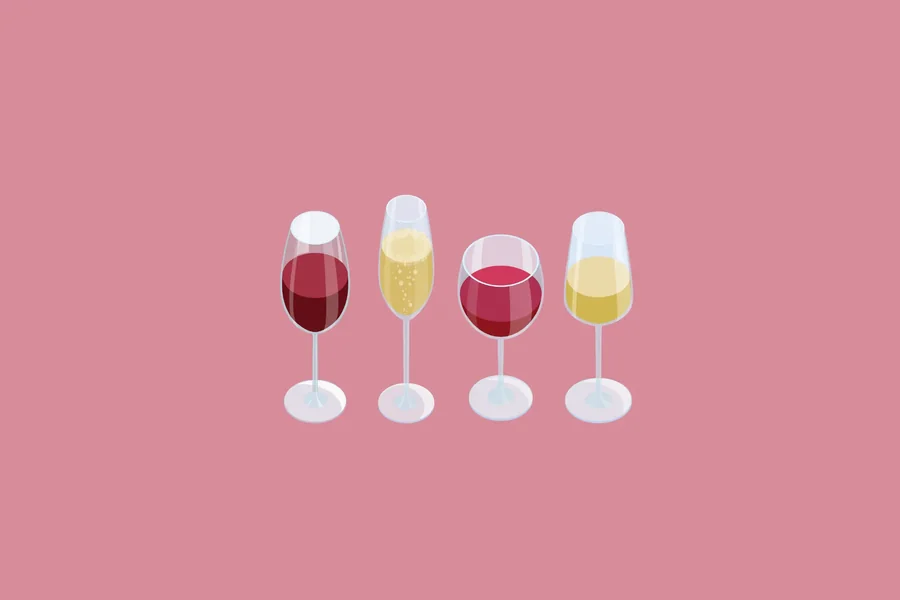
Wine glasses are designed to improve various aspects of the wine drinking experience, so they differ in size and shape depending on the type of wine. Even though any glass can hold wine, there are specialized wine glasses that complement wine.
To help you understand what glasses are designed for what wine, we will go over several different types of wine glass.
Red Wine Glasses
Compared to the other wine glasses, red wine glasses are characterized by a large bowl and a wide glass opening. Since most red wine takes longer to develop its flavor, it has to be exposed to air and for that reason red wine glasses are made to be wide.
Bordeaux Glass
Full-bodied red wines like Malbec and Cabernet Sauvignon are typically served in a tall and wide Bordeaux glass. Similar to the other red wine glasses, the breathing space is intentional, but in this specific case, the design is to direct wine to the back of the mouth.
Burgundy Glass
Compared to the Bordeaux glass, the Burgundy glass is a bit more narrow in shape. Despite being a bit narrow, the Burgundy glass is a very wide red wine glass. Being even a bit more wide than a Bordeaux glass, a Burgundy glass is best served to red wines like Pinot Noir that have more delicate aromas.
White Wine Glasses
Compared to red wine glasses, white wine glasses are designed to have a smaller bowl to keep the wine at a bit cooler of a temperature.
Chardonnay Glass
Compared to the other glasses for serving white wine, the Chardonnay glass has a significantly larger bowl. Despite being a bit larger than other white wine glasses, the design of the Chardonnay glass still serves its function of keeping the freshness of the wine.
Sauvignon Blanc Glass
Sauvignon Blanc glasses are designed with a smaller mouth and narrower bowl to enhance the retention of aromas.
Sparkling Wine Glasses
Sparkling wines require specialized glasses to help maintain the carbonation.
Flute Glass
The flute is a glass with a tall narrow bowl to preserve carbonation and focus aromas to the nose. Because of these characteristics, the flute is the standard glass for almost all sparkling wines.
Tulip Glass
The tulip glass is a bowl that is wider at the center and narrows at the top. This glass facilitates the gathering of aromas while helping maintain carbonation.
Rosé Wine Glasses
Rosé wine glasses are a balance of white and red wine glasses.
These glasses can also be used for most styles of rosé wine.
Stemless Wine Glasses
The modern design of stemless wine glasses has made them a popular option.
These can be used for all types of wine and are easily stored and less likely to be accidentally knocked over.
Dessert Wine Glasses
Because of their sweet nature, dessert wines are often served in smaller portions and therefore in smaller glasses.
These glasses have a compact bowl that focuses the aromas and flavors of Port, Sherry, late harvest and similar wines.
Universal Wine Glasses
These glasses do a better job of handling different wine styles. They tend to have medium bowls so that they can be balanced between sufficient aroma concentration and sufficient airflow.
For wine drinkers that appreciate multiple styles of wine, but don’t want an entire collection of glasses, these glasses are a good option.
Crystal Wine Glasses
These glasses are more expensive because they are more aesthetically pleasing due to their clarity and brilliance. They are also thinner and lighter. These are chosen more often for formal occasions.
Because these glasses are so much nicer, they are chosen more often for higher quality wine.
Everyday Wine Glasses
As the name suggests, these glasses are more practical. They are often more durable and safer for everyday use.
These glasses are great for family dinners or casual events.
Conclusion
With different types of wines, there also should be different types of glasses. Each glass style serves a purpose. Each wine drinker should also appreciate the type of glass that appropriately matches their style wine.
